Education
KPI MONITOR Solutions for Universities
A dedicated module for regulating centralized data collection is provided — Reporting Campaigns, with advanced tools for monitoring the data entry process by functional units of the university. Reporting Campaigns for data entry enable:
- Organizing timely data collection
- Tracking the data collection process
- Notifying responsible parties
- Configuring a role-based data approval system
- Ensuring centralized management of departments
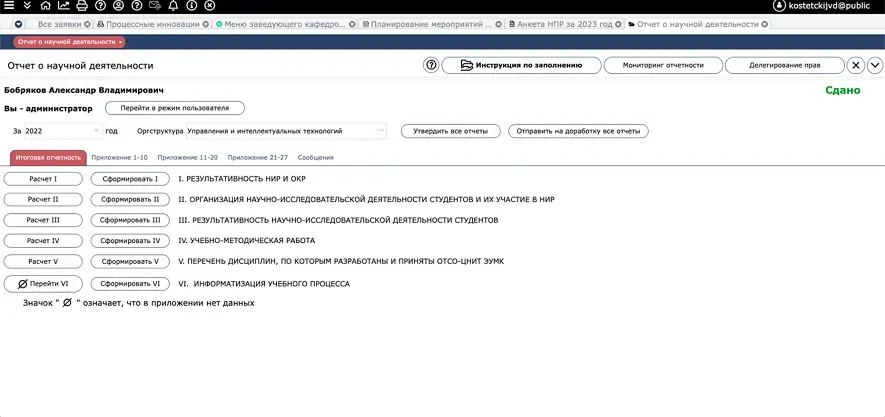
A dedicated module for regulating centralized data collection is provided — Reporting Campaigns, with advanced tools for monitoring the data entry process by functional units of the university. Reporting Campaigns for data entry enable:
- Organizing timely data collection
- Tracking the data collection process
- Notifying responsible parties
- Configuring a role-based data approval system
- Ensuring centralized management of departments
Broad capabilities for importing data from diverse sources:
- University accounting systems storing data on student performance, certifications, management and financial reports, actual and planned budget items, etc.
- Data transport files in XLS, DBF, XML, TXT formats
- Consolidation of data from all educational institution’s information sources into a single analytical system provides a unified entry point for obtaining complete information required for analysis and management decision-making, as well as generating consolidated reports across all areas of the university’s activities.
Ease of presentation and visual clarity for large datasets. Multi-level analysis tools enabling identification of cause-and-effect relationships and granular metric breakdown from general to specific:
- Web interface
- Intuitive graphical data representation
- Individual interface customization
- Interactive metric breakdown by institutes, departments, academic degrees, educational programs, funding sources, etc.
- Analysis of metric correlations
- Impact assessment (Pareto chart)
- Trend and dynamics analysis
- Forecasting
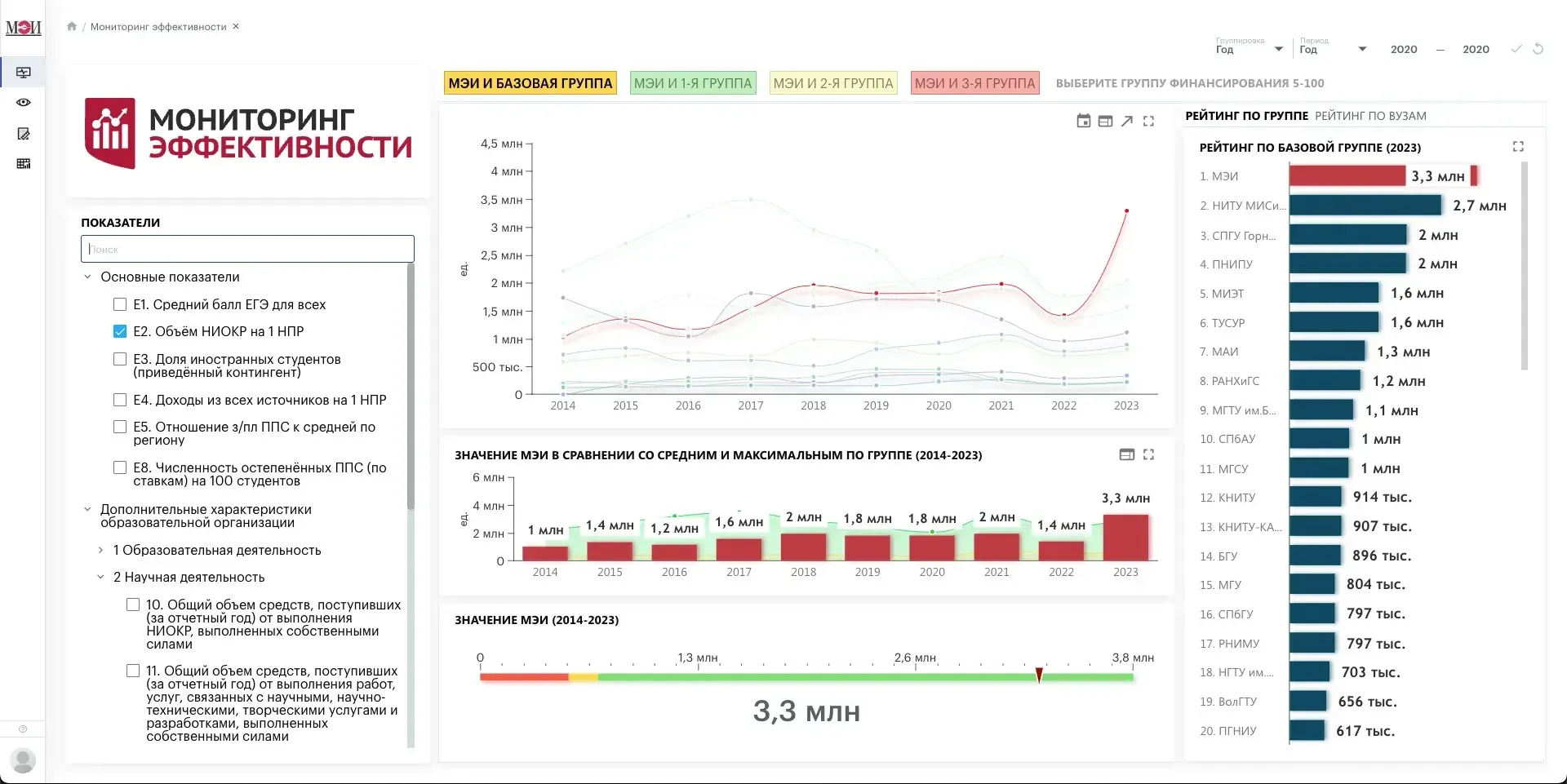
Examples of metrics:
- Percentage of faculty with academic degrees and/or titles
- Number of dissertations defended by full-time faculty and internal part-time staff
- Average age of faculty members
- Percentage of master’s degree students
- Average annual funding volume for scientific research
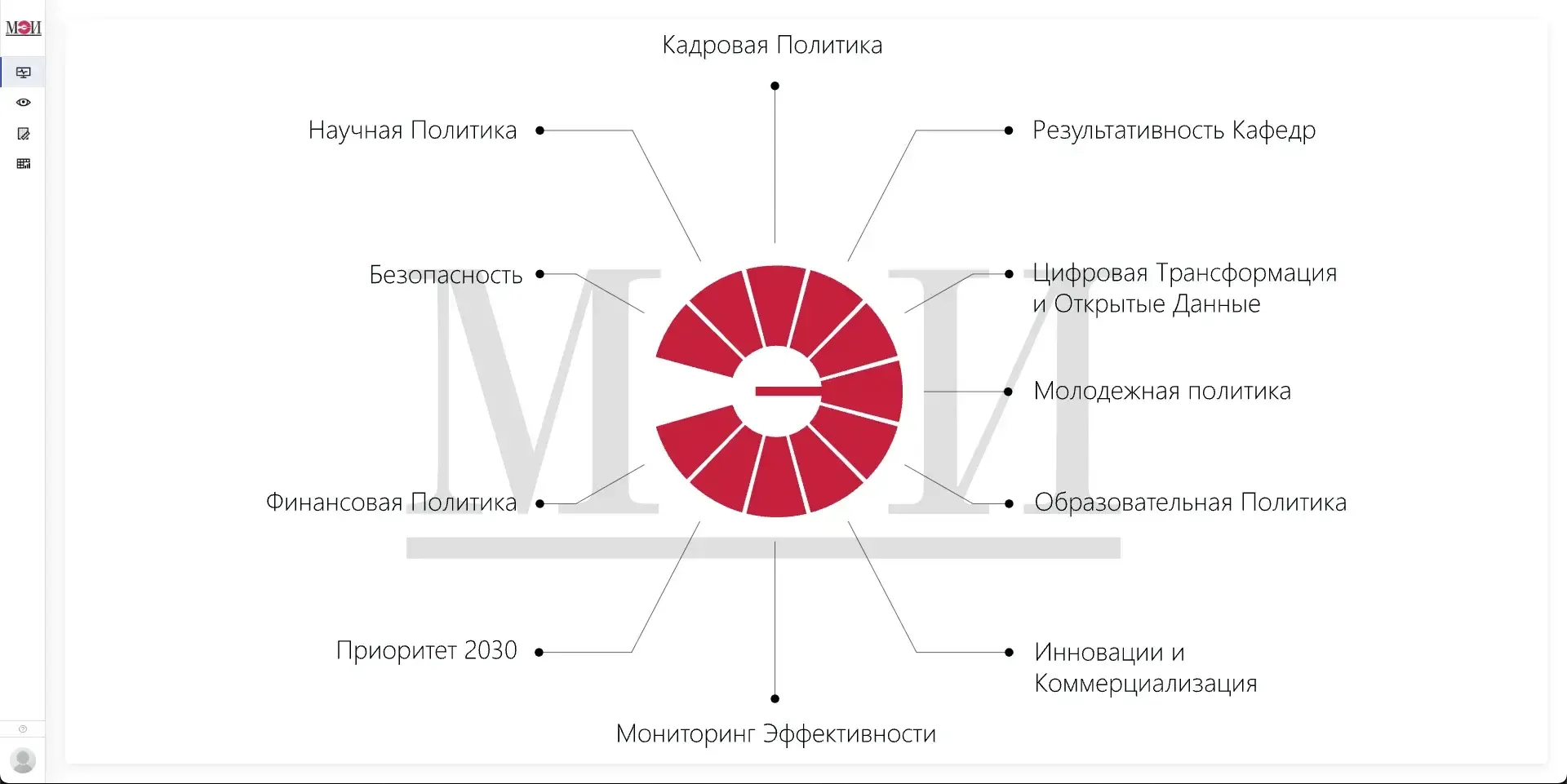
Additionally, universities use indicators that reflect the implementation of their strategy across various functional areas. Examples of grouped metrics for educational institutions by application areas include the following categories:
- Human Resource Management
- Student Management
- Finance and Budgeting
- Academic Process and Performance
- Research Activity
- Accreditation
- Flexible access control system for information
- In-memory data processing technology
- User customization mechanism
- Ad-hoc analytical reporting
- Automated notification system (SMS, email)
- System deployment via any web browser in both Internet and Intranet networks
TURBO University
Advantages of TURBO University


Key Capabilities